Air-tube earphones · Bluetooth
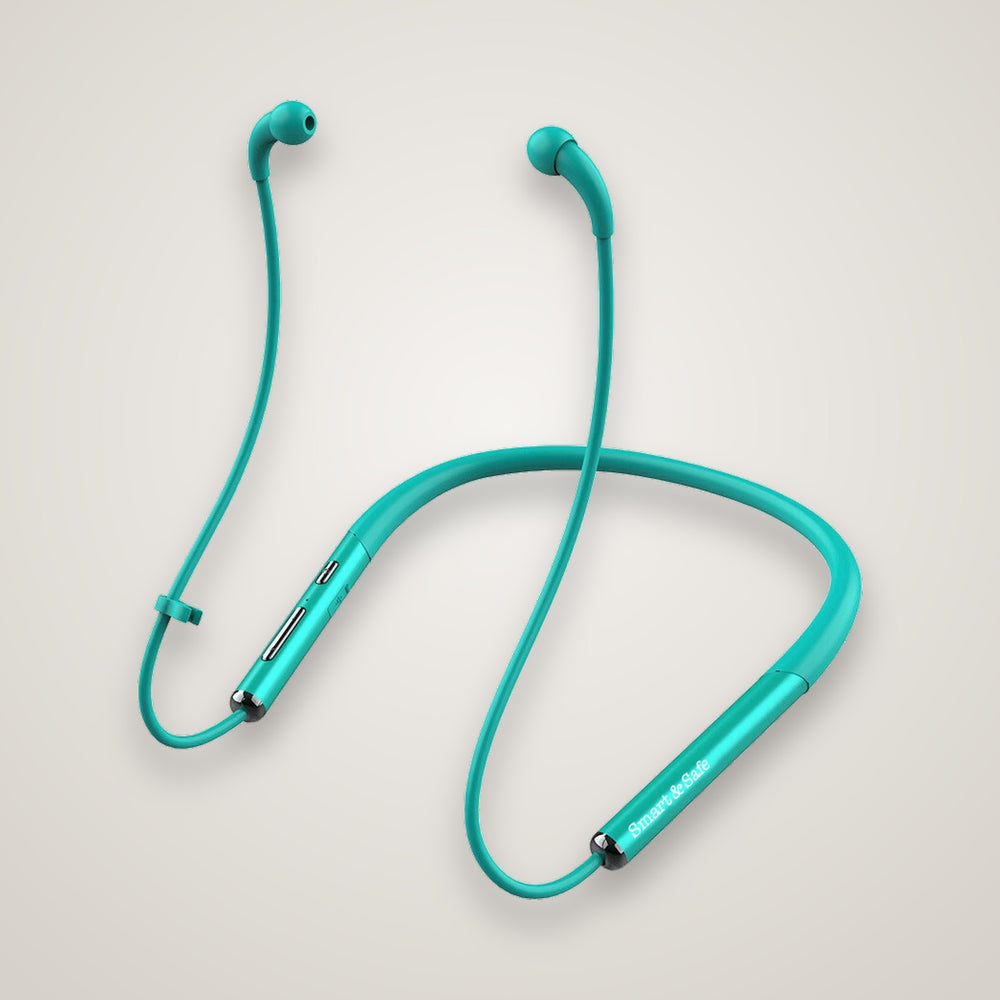
BlueTubeZ® Bluetooth Air-Tube Headset
A Bluetooth neckband that sends sound to your ears through hollow air tubes.
The next BlueTubeZ® is on its way.
A new generation is arriving soon. Leave your email and we will let you know as soon as it is available.
- Lab report: Ordos Technologies, June 2020
- Free US shipping on orders over $25
- Returns within 30 days of purchase. Contact us for return instructions before sending your item back.
Laboratory testing
Measured during a call.
Ordos Technologies (report Y20SNS144TR, 28 June 2020) measured the electric field at the Bluetooth receiver and at the earpiece, inside a semi-anechoic chamber, with a Samsung Note 8.
See all readings
| Mode | Bluetooth receiver | Earpiece |
|---|---|---|
| Standby | 0.3 V/m | 0.3 V/m |
| Ring | 0.7 V/m | 0.5 V/m |
| Call | 1.4 V/m | 0.4 V/m |
| Phone itself | 4.8 V/m |
These readings describe the tested headset and phone under lab conditions. The new generation will be listed with its own details. Smart & Safe products are not medical devices and make no health claims.
Read the full lab report (PDF)How it works
Wireless to your neck. Air to your ears.
Bluetooth neckband
The Bluetooth electronics sit in the neckband, away from your ears.
Hollow air tubes
Sound travels up to the earbuds through flexible silicone tubes.
Two devices at once
Bluetooth 5.0 connects to two devices at the same time.
Specifications
Technical details
Previous generation
- Play time
- Up to 20 hours
- Standby
- Up to 200 hours
- Weight
- 42 g
- Water resistance
- IPX4
- Bluetooth
- 5.0
Questions
Questions about BlueTubeZ
When will BlueTubeZ be back?
A new generation is on its way. Join the waitlist on this page and we will email you as soon as it is available.
How does it work?
The Bluetooth electronics sit in the neckband. Sound travels to your ears through hollow silicone tubes, so there are no speakers in the earbuds.
What was tested?
Ordos Technologies measured the electric field at the receiver and at the earpiece in standby, ring and call modes (June 2020).